Taxco, the Silver City
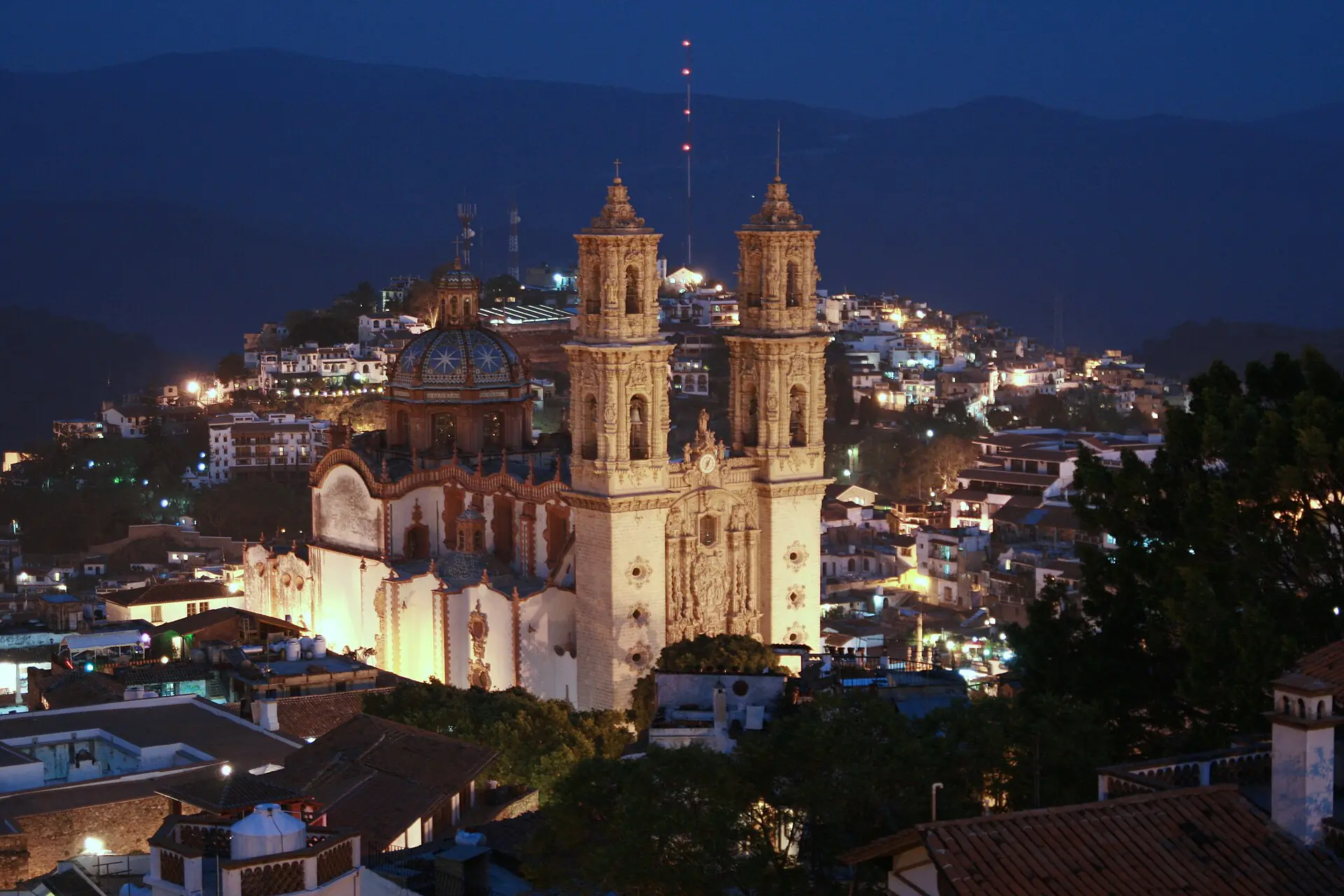
Three hours south, a silver town climbs a mountainside in white walls and red roofs, crowned by the most extravagant parish church in Mexico. Buy by the stamp, ride the Beetles, and give it the whole day.
The short version
- First-class buses run Taxqueña to Taxco in about three hours several times daily — book the early departure out and a late return, and the day’s arithmetic works.
- Silver made the town twice: colonial mining built it, and the 1930s workshop revival (William Spratling’s studios and their descendants) made it the craft capital — the .925 sterling stamp is the buyer’s law, per the alarm, and reputable platerías expect you to check.
- Santa Prisca — the rose-stone baroque church a mining magnate, José de la Borda, built in the 1750s to say thank you at full volume — is the skyline and the interior justifies the exterior: gilded retablos floor to vault, free to enter, modest dress respected.
- The white Volkswagen Beetle taxis remain the working fleet on lanes too steep and narrow for anything longer — a ride up to the Cristo viewpoint doubles as the town’s best transport experience.
- The Plaza Borda’s cafés ring the church for the sitting hour; the silver market’s alleys below it run from workshop-grade to tourist-grade in adjacent stalls, which is what the stamp rule is for.
- The Cristo Rey statue above town gives the full red-roof panorama — Beetle up, walk down through lanes that justify the shoe advice.

Getting there
Taxqueña’s first-class platforms run the Taxco corridor all morning; the highway winds into Guerrero’s hills with the last half hour climbing properly. Buy the return with the outbound — evening buses fill on weekends — and note the terminal sits below the town center: a short Beetle ride or a steep ten-minute walk opens the day. Tours from the capital bundle Taxco with Cuernavaca stops; the bus-it-yourself version trades the guide for double the hours in the town itself, which is the better trade.
The day
Climb to the Plaza Borda first and let Santa Prisca set the standard — the facade in morning light, then the interior’s gold at unhurried pace; nothing else in town competes with it and nothing needs to. The silver hours follow: the established platerías around the plaza for workshop pieces with the stamp and the certificate, the market alleys for volume and haggling with the alarm’s rule as your compass. Lunch on a terrace with the church in view — pozole verde is the Guerrero card. The afternoon rides a Beetle to the Cristo viewpoint for the panorama, walks back down through the white lanes, and spends the last hour at whichever café balcony frames the plaza best. The evening bus rolls down the mountain with the town lighting up behind — worth the window seat on the right.
When to go
November through April runs dry and clear — the walking season for a town that is entirely walking. Summer afternoons bring reliable mountain rains that wash the lanes and empty the plaza on schedule; mornings stay workable. Semana Santa transforms Taxco with Mexico’s most intense Holy Week processions — extraordinary and completely booked, a thing to plan for deliberately or avoid knowingly. The silver fair (late November–early December) adds workshops’ best pieces and national buyers. Weekdays beat weekends year-round for both buses and bargaining room.
Frequently Asked Questions
How do I know silver is real beyond the stamp?
Weight, cold touch, and the stamp together — sterling carries heft that alpaca lacks, and honest dealers hand you a loupe before you ask. Prices track weight and workmanship; a deal wildly below the plaza’s going rate is answering your question for you.
Is the bus safe and comfortable?
First-class Mexican intercity buses run reclining seats, luggage checks, and highway routing as standard — it’s the country’s workhorse system and this corridor is well-served. The usual bus-station awareness applies; the ride itself is the easy part of the day.
Taxco or Puebla as the Mexico City day out?
Puebla (documented on this network) for food, talavera, and volcano views at two hours; Taxco for silver, baroque, and mountainside drama at three. Shoppers and photographers lean Taxco; eaters lean Puebla; neither answer is wrong.
What’s the Spratling story?
An American architect-turned-designer who set up silver workshops here in 1931, trained a generation of smiths, and turned a fading mining town into a design capital — his pieces now live in museums and auction catalog들. The small Spratling museum behind Santa Prisca tells it with originals.
Can I visit a mine?
The Prehispanic mine under town runs short guided descents for the curious — a novelty half hour rather than a highlight. The town’s real mining story is told better by the church the ore paid for.