Tepoztlán and the Tepozteco
Ninety minutes south, a pueblo mágico under cliffs runs a real pyramid climb, a UNESCO convent, and a market that out-cooks its restaurants — plus a mystic reputation worn cheerfully, crystals next to cecina.
The short version
- Buses run Taxqueña to Tepoztlán in about 75–90 minutes at steady frequency — Pullman de Morelos among the operators, pullman.mx — with the alarm’s midweek rule as the trip’s first decision: chilango weekends fill the town to festival density.
- The Tepozteco pyramid rides its cliff 400 vertical meters above town — the trail runs stone steps through forest most of the way, the alarm’s honest ninety minutes up for most legs, with a small site fee at the top and the temple platform’s valley view as the payment.
- The coati rule per the alarm is behavioral fact: the ring-tailed troop working the summit has mastered zippers and snack diplomacy — bags closed, food unshown, and the photographs taken at their distance, not yours.
- The pyramid honors Tepoztēcatl, the pulque deity — the small temple is Aztec-era and the September festival still climbs to it — giving the town’s mystic economy per the alarm its genuinely old anchor.
- The Ex-Convento de la Natividad (16th-century Dominican, UNESCO-listed with the volcano-slope monastery group) runs the alarm’s quiet hour: frescoed cloisters, a seed-mural gate tradition, and courtyard shade the climb wants afterward.
- The market is the alarm’s kitchen: cecina with green sauce, itacates off the comal, esquites, and the tepoznieves ice-cream houses’ hundred improbable flavors — with the mystic storefronts (temazcal bookings, crystals, cleansings) trading openly alongside.

Getting there
Taxqueña’s platforms run the corridor all day; the alarm’s midweek rule does more for this trip than any other single choice — the same town on Tuesday and Sunday is two different products, and the Sunday version includes standstill lanes and a queued pyramid trail. Arrive by mid-morning to beat the heat to the climb. The return buses run into the evening; the last comfortable departure is worth noting at the terminal on arrival.
The day
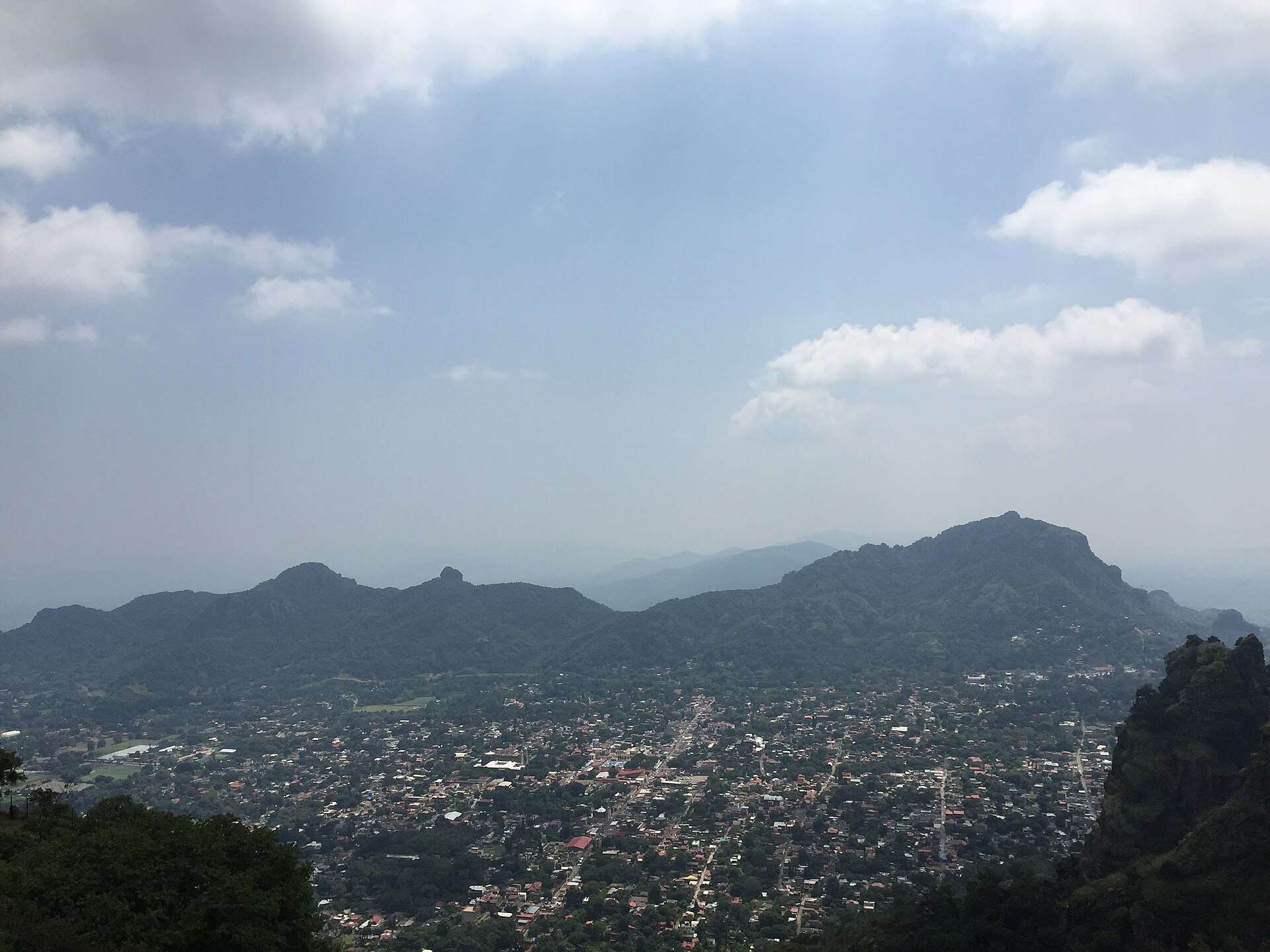
Climb first in the morning cool: the trail’s stone stairs find a rhythm, the forest does the shading, and the final scramble opens onto the temple platform — the town grid below, the valley’s green box of cliffs around, and the coatis executing their inspection per the alarm’s closed-bag protocol. The descent lands you at the market for the earned lunch: cecina at a family stall, itacates as the local format, esquites walking. The ex-convent takes the digestive hour — cloisters, frescoes, and the seed-mural gate if the season’s version is up — and the afternoon browses at pueblo pace: the mystic storefronts’ cheerful commerce, a tepoznieves cone from the hundred-flavor board, and the plaza’s church-and-cliff composition as the closing photograph. The evening bus rolls north with the cliffs going gold behind.
When to go
October through April runs the dry-season climbing weather; summer brings afternoon rains that argue harder for the morning ascent and green the cliffs in compensation. The alarm’s midweek rule is seasonless and supreme. The Tepoztēcatl festival (early September) and Day of the Dead dress the town at full cultural voltage — deliberate visits, booked ahead. The Carnival’s chinelos dancers (February–March window) add the feathered-costume spectacle for planners. Any cold-season clear morning makes the summit’s case best.
Frequently Asked Questions
How hard is the climb really?
The alarm’s ninety-minute figure covers most walkers — steep, stepped, and sustained, with hands touching rock in the final stretch. Real shoes and water are the kit; the trail’s vendors sell the backup. It’s a genuine hike wearing a tourist attraction’s name tag, and the platform view settles the account.
Are the coatis dangerous?
Opportunistic, not aggressive — they snatch visible food and probe open bags with professional speed, and feeding them (tempting, prohibited) escalates the whole system. Closed zippers and empty hands keep the encounter on photogenic terms; they’re genuinely charming at exactly that setting.
What’s an itacate?
A thick triangular corn-masa cake off the comal, split and stuffed — the town’s signature market bite, eaten standing with salsa decisions made under pressure. Cecina (thin-cut salted beef, grilled) with green sauce is the sit-down companion. The market beats the restaurants, per the alarm, at a third the bill.
What’s the mystic reputation about?
A long-running energy-vortex lore layered on the truly old pulque-deity mountain — temazcal sweat lodges, cleansings, and crystal commerce operating beside the tortillas, per the alarm’s cheerful framing. Take a temazcal seriously if you take one at all (real heat, real duration); take the crystals as souvenirs at whatever weight suits.
Tepoztlán or Teotihuacán from Mexico City?
Teotihuacán (documented on this network) for the monumental archaeology morning; Tepoztlán for the climb-town-market day with the pueblo register. Pyramids feature in both sentences and mean entirely different days — the capital’s classic answer is both, midweek, in either order.