25 Mexico City Hotels Where the Building Came First
A grand department store under an Art Nouveau glass dome, a count’s 17th-century palace, Legorreta’s bright 1968 modernist landmark, and a hotel wrapped around a racetrack’s old oval.
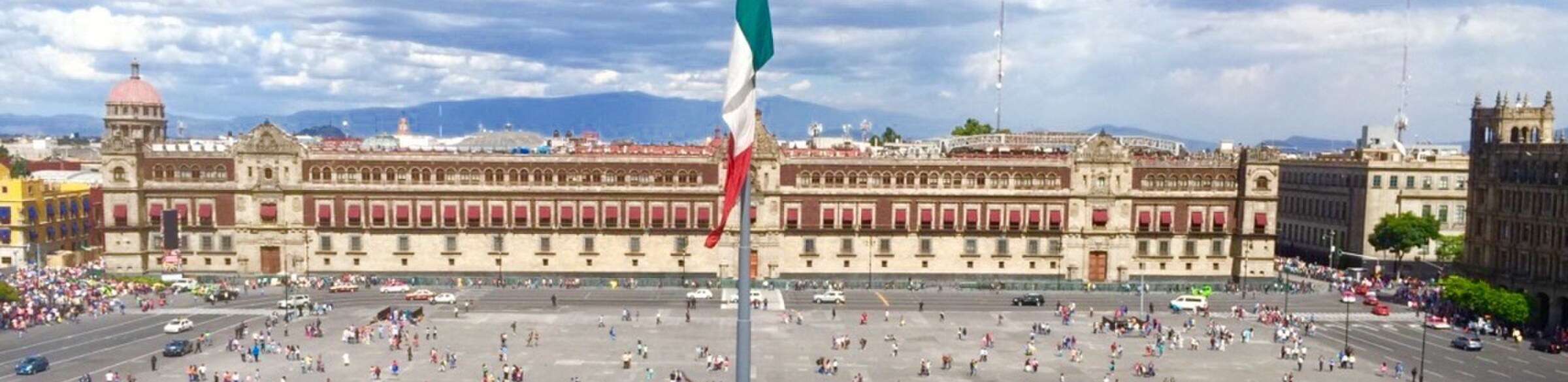
Mexico City turned a count’s palace, a grand department store, Porfirian mansions, and Art Deco apartment houses into hotels. This list has the 1899 store under its Art Nouveau glass dome, the 17th-century palace of the Counts of Miravalle, Ricardo Legorreta’s bright 1968 modernist landmark in Polanco, and the Condesa hotel built on the oval of an old racetrack.
The list is grouped by character, not ranked. Where a hotel’s own site could be confirmed, its name links there; most are listed by name only, and a quick search of the name finds the hotel’s own page.
Centro Historico palaces
Gran Hotel Ciudad de Mexico · Centro Historico
The Gran Hotel opened in 1899 as El Centro Mercantil, one of Mexico’s first grand department stores, just off the Zócalo. A vast curved Art Nouveau stained-glass ceiling was installed over its atrium in 1908. The building became the Gran Hotel in 1968, and its iron-cage elevators and lobby have appeared in films, among them the James Bond picture Licence to Kill.
Downtown Mexico · Centro Historico
Downtown is set in the 17th-century palace of the Counts of Miravalle, a colonial noble residence near the Zócalo. Grupo Habita opened it in 2010, pairing the stone palace with industrial interiors, a rooftop pool, and ground-floor shops.
Circulo Mexicano · Centro Historico
The Círculo Mexicano is in a 19th-century building behind the Metropolitan Cathedral, said to have been the home of the photographer Manuel Álvarez Bravo. Grupo Habita opened it in 2017, with pared-back, Shaker-inspired rooms.
Hotel Gillow · Centro Historico
The Gillow opened in 1875 on Isabel la Católica, one of the oldest hotels still running in the Centro Histórico. It is named for the Gillow family, whose name is tied to Archbishop Eulogio Gillow.
Best Western Hotel Majestic · Centro Historico (Zocalo)
The Majestic is in a building on the old Portal de Mercaderes, the colonial arcade along the west side of the Zócalo. Its rooftop restaurant looks straight onto the Zócalo and the Metropolitan Cathedral, a prime spot on Independence Day. It has run as the Majestic since 1937.
Umbral, Curio Collection by Hilton · Centro Historico
Umbral opened in 2019 in a restored downtown building, Hilton’s first Curio Collection hotel in Mexico. It is built around an art-gallery idea, with a rooftop over the historic center.
Hotel Ritz Mexico City · Centro Historico
The Ritz is a long-running hotel on Avenida Madero, the main pedestrian street of the Centro Histórico, in business since the 1930s. It sits on the old axis between the Alameda Central and the Zócalo.
Reforma and Polanco landmarks
Hotel Geneve · Zona Rosa
The Geneve opened in 1907 and is widely counted among Mexico City’s first luxury hotels. Its antique-filled lobby and glass-roofed salon read almost as a museum of the Porfirian era. It was reported in 2026 to have been bought by Carlos Slim’s group.
Marquis Reforma · Paseo de la Reforma
The Marquis Reforma opened in 1991, with a curved pink cantera-stone facade in an Art Deco-revival style on Paseo de la Reforma. It stands a short walk from the Ángel de la Independencia and is a member of the Leading Hotels of the World.
Hotel Imperial · Paseo de la Reforma
The Imperial is in a Porfiriato-era building on a wedge-shaped corner of Paseo de la Reforma, near the Columbus roundabout in Colonia Juárez. It is one of the surviving mansion-era buildings from Reforma’s turn-of-the-century grand avenue.
Hotel Carlota · Cuauhtemoc (off Reforma)
The Carlota reopened in 2015 inside the shell of a 1960s-70s courtyard motor hotel on Río Amazonas, a block from Reforma. The architect Javier Sánchez of JSA redesigned it around a glass-walled central pool, and it became a showcase of contemporary Mexican design.
Camino Real Polanco · Polanco
The Camino Real was designed by Ricardo Legorreta and opened in 1968, for the Mexico City Summer Olympics. It is a landmark of Mexican modernism, known for its bright pink and yellow walls and its monumental fountain. It shows commissioned works by modern artists, among them Alexander Calder, Mathias Goeritz, and Rufino Tamayo.
Roma and San Rafael houses
Casona Roma Norte · Roma Norte
The Casona is in a restored early-20th-century mansion in Roma Norte. It opened as a boutique hotel and cultural space on October 1, 2024.
Brick Hotel · Roma Norte
The Brick is built around a 1904 Porfirian mansion on Calle Orizaba in Roma Norte. It was restored and reopened with a modern addition around 2012, and is a member of Small Luxury Hotels of the World.
Ignacia Guest House · Roma Norte
Ignacia is in a mansion built in 1913, restored as a guest house and reopened in 2017. It is named for Ignacia, the housekeeper who ran the original family home for decades.
La Valise · Roma Norte
La Valise is a three-suite hotel in a restored early-20th-century Roma townhouse. Its signature suite has a bed on rails that rolls out through the doors onto a private balcony.
Nima Local House Hotel · Roma Norte
Nima is in a restored early-20th-century house in Roma Norte. It is a small design hotel with only a handful of rooms.
El Patio 77 · San Rafael
El Patio 77 is in a 19th-century French-style mansion in the San Rafael neighborhood. It bills itself as Mexico City’s first eco-friendly bed and breakfast, with rooms themed to Mexican states.
Condesa deco and mansions
Condesa DF · Condesa
Condesa DF is in a triangular 1928 French-neoclassical building facing Parque España, in Condesa. Grupo Habita opened it in 2005, with interiors by the designer India Mahdavi.
Casa Decu · Condesa
Casa Decu is in a restored Art Deco house from Condesa’s interwar building boom of the 1930s. It is a small boutique hotel named for the Deco architecture it keeps.
Hippodrome Hotel · Condesa
The Hippodrome stands on Avenida México, the ring street that follows the oval of the old Hipódromo de la Condesa racetrack, which closed in the 1920s and gives the hotel its name. It sits among Condesa’s 1920s and 1930s Art Deco apartment blocks facing Parque México.
Condesa Haus · Condesa
Condesa Haus is in an early-20th-century Condesa mansion, restored as a bed and breakfast. It keeps period features of the Porfirian-era house, including its tilework and ironwork.
Polanco residences
Pug Seal Anatole France · Polanco
Pug Seal Anatole France is a boutique hotel in a converted house on Calle Anatole France, in Polanco. It is one of the small Pug Seal group of residence-style Polanco hotels.
Busue · Polanco
Busue is a boutique hotel in a former private residence in Polanco. It keeps a house-like scale, with a small number of suites.
Casa Polanco · Polanco
Casa Polanco is in a restored mansion from Polanco’s mid-20th-century residential era. It opened as a boutique hotel in 2022, with a curated collection of Mexican art.
Frequently Asked Questions
Are these hotels ranked?
No. The groups sort them by character, and the order within each group carries no meaning.
What made a hotel interesting enough for this list?
A story. Every entry was a palace, a department store, a Porfirian mansion, or an Art Deco house with a past. Comfort alone did not qualify a hotel.
Why are there no prices?
Rates change daily and a priced list goes stale in a month. Search a hotel by name for its own site, where the rate is current and you book direct.
Which hotel puts me closest to the day trips on this site?
Most day trips from Mexico City leave by road or coach, to Teotihuacán, Puebla, and the towns around the valley. The Centro Histórico and Reforma hotels sit most central.
Do the small hotels book out faster than the grand ones?
Usually. The small Roma and Condesa houses — La Valise, Ignacia, Condesa Haus — hold few rooms and fill first. Book those well ahead.