Tula’s Stone Warriors
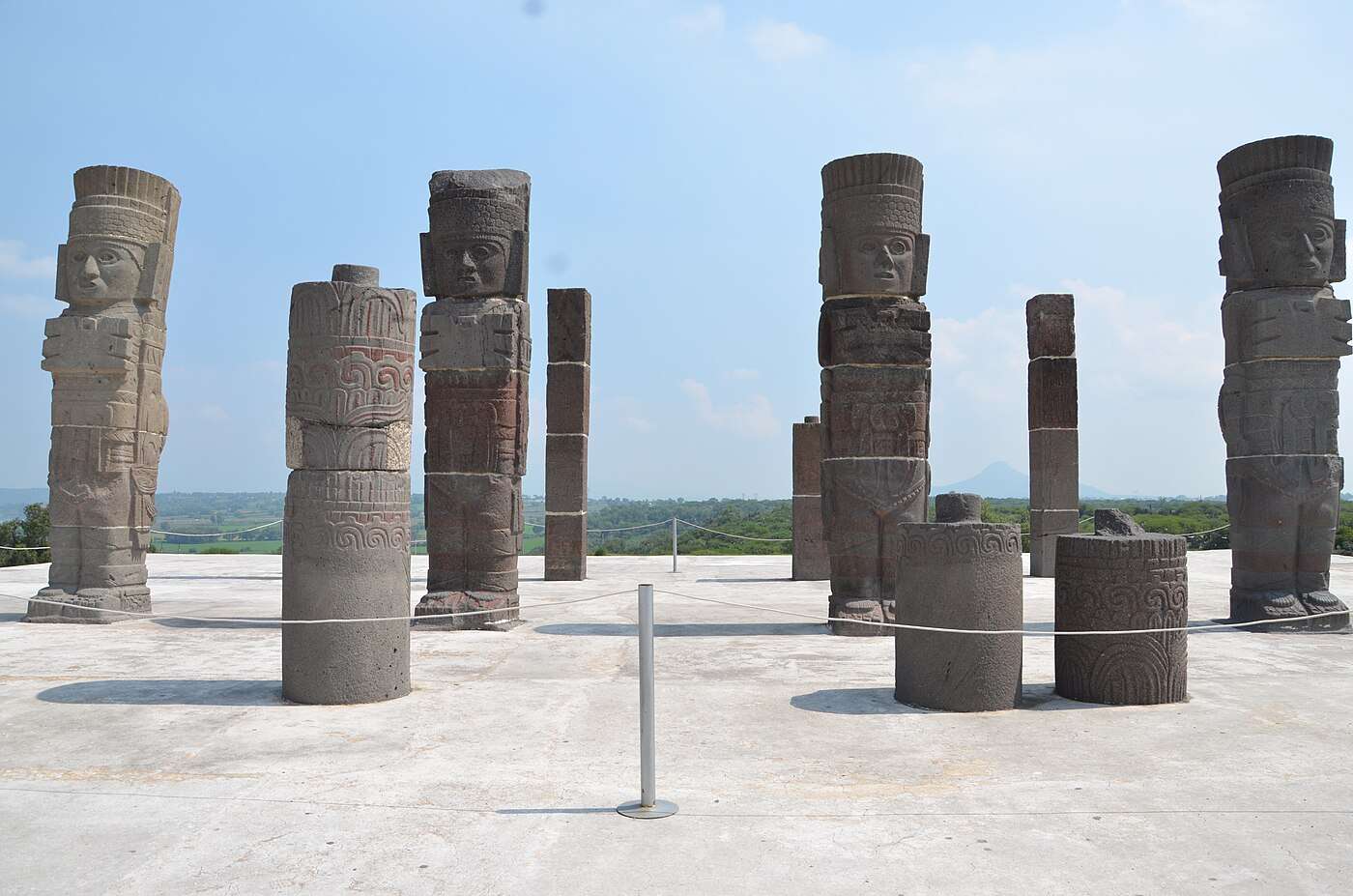
Four basalt warriors have held the roof of a vanished temple for a thousand years — the Toltec capital, two hours north.
The short version
- Tula — Tollan-Xicocotitlan — ran central Mexico between Teotihuacan’s fall and the Aztec rise, roughly 900 to 1150, and the Aztecs mythologized it relentlessly: to call something Toltec was to call it masterful. Site background via inah.gob.mx.
- The Atlantes are the reason to come: four basalt warriors, 4.6 metres tall, standing in formation atop Pyramid B where they once held a temple roof — butterfly breastplates, atlatl spear-throwers, and a thousand years of weather worn into volcanic stone.
- The plaza below keeps the rest of the capital’s bones — two ballcourts, the colonnaded Burnt Palace with its benches of marching warriors, and the Coatepantli serpent wall — legible, uncrowded, and blessedly free of Teotihuacan’s vendor gauntlet.
- Buses run from Terminal Central del Norte to Tula de Allende about every half hour through the morning, two hours each way; a short cab covers the last stretch from town to the site gate. Entry runs around 100 pesos — carry cash.
- Scholars still argue over the twin warrior columns at Chichén Itzá, a thousand kilometres away, that mirror Tula’s style almost exactly — conquest, migration, or trade, nobody fully knows, which makes standing at the original half of the riddle better.

Getting there
From Terminal Central del Norte, buses to Tula de Allende leave about every half hour in the morning and take two hours through the Mezquital valley. From Tula’s bus station, a five-minute cab or a half-hour walk reaches the archaeological zone north of town. Tours from the capital bundle Tula with the colonial monastery town of Tepotzotlán, which spares the logistics and costs the solitude; the bus version has you at the gate near opening with the site to yourself.
The day
Walk in through the cactus garden and take the long approach across the plaza — the Atlantes appear gradually above Pyramid B, exactly as processions were meant to see them. Climb the pyramid stairs and meet the warriors at eye level: the carving detail — sandals, mirrors, the butterfly pectorals — survives best in low morning light. Circle the Burnt Palace’s columned halls and bench friezes, pace out both ballcourts, and find the Coatepantli’s skeleton-and-serpent carvings on the north side. The small site museum fills in what the looters and the Aztecs carried off. Back in Tula de Allende, the fortress-like 1550s cathedral and a market lunch close the visit before the afternoon bus home.
When to go
November through April — the dry season — keeps the plateau clear and the light sharp; winter mornings can start crisp and end hot, which is the argument for arriving at opening. Summer afternoons bring reliable thunderheads that look magnificent and soak the shadeless plaza. Weekdays are near-empty; Sundays bring free-entry crowds of nationals and a livelier, longer day.
Frequently Asked Questions
How do you get to Tula without a car?
Bus from Terminal Central del Norte to Tula de Allende — about two hours, roughly every half hour in the morning — then a short cab to the site. Check return times on arrival; late-afternoon departures thin out.
What are the Atlantes?
Four 4.6-metre basalt warrior columns on Pyramid B that once held up a temple roof — armed with atlatls, dressed in butterfly breastplates, and standing since roughly the year 1000. They are the emblem of Toltec power the Aztecs spent centuries name-dropping.
Tula or Teotihuacan?
Teotihuacan for scale, Tula for intimacy: fewer buses, fewer vendors, and sculpture you meet face to face instead of pyramids you queue for. Ruins devotees do both; Tula is the one that feels discovered.
Is the site shaded or strenuous?
Neither shaded nor steep — one moderate pyramid stair and flat plaza walking, under open sky the whole time. Hat, water, and a morning start handle it.
What is the Chichén Itzá connection?
Chichén’s Temple of the Warriors repeats Tula’s columned halls and warrior sculpture so closely that archaeologists have debated conquest, migration, and shared trade culture for a century — without settling it. Seeing Tula first makes the Yucatán’s echo unmistakable.